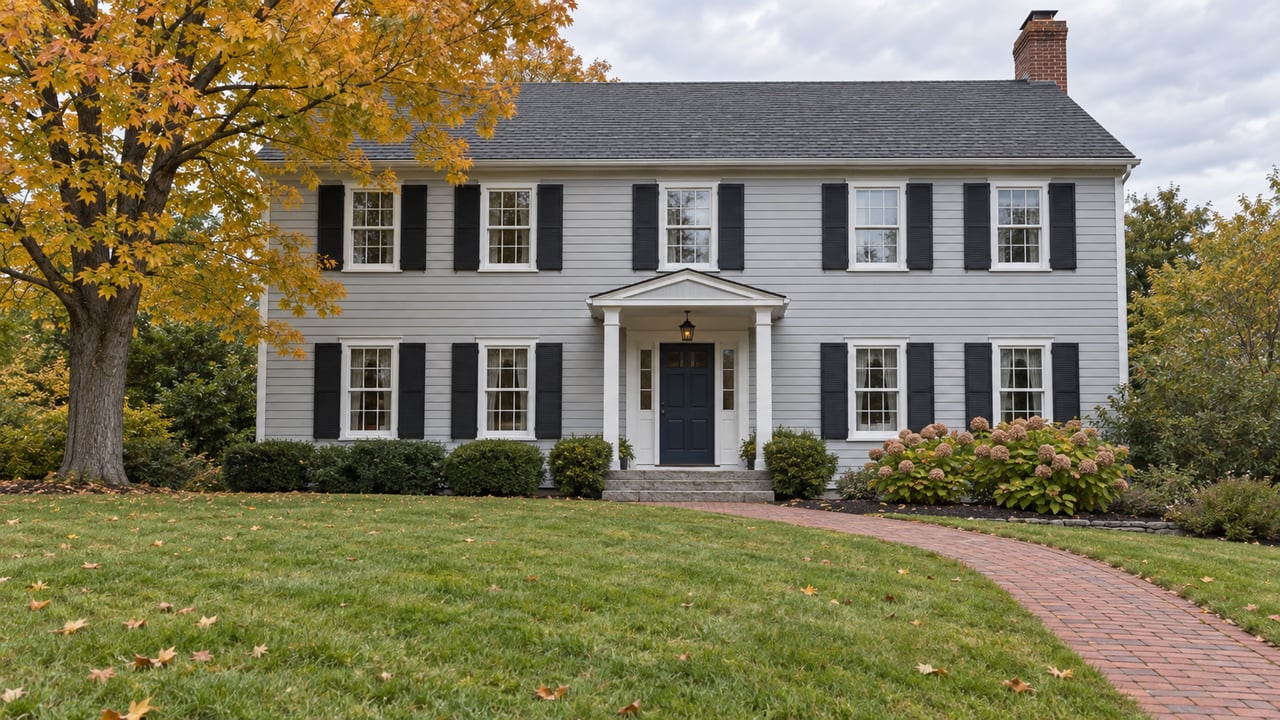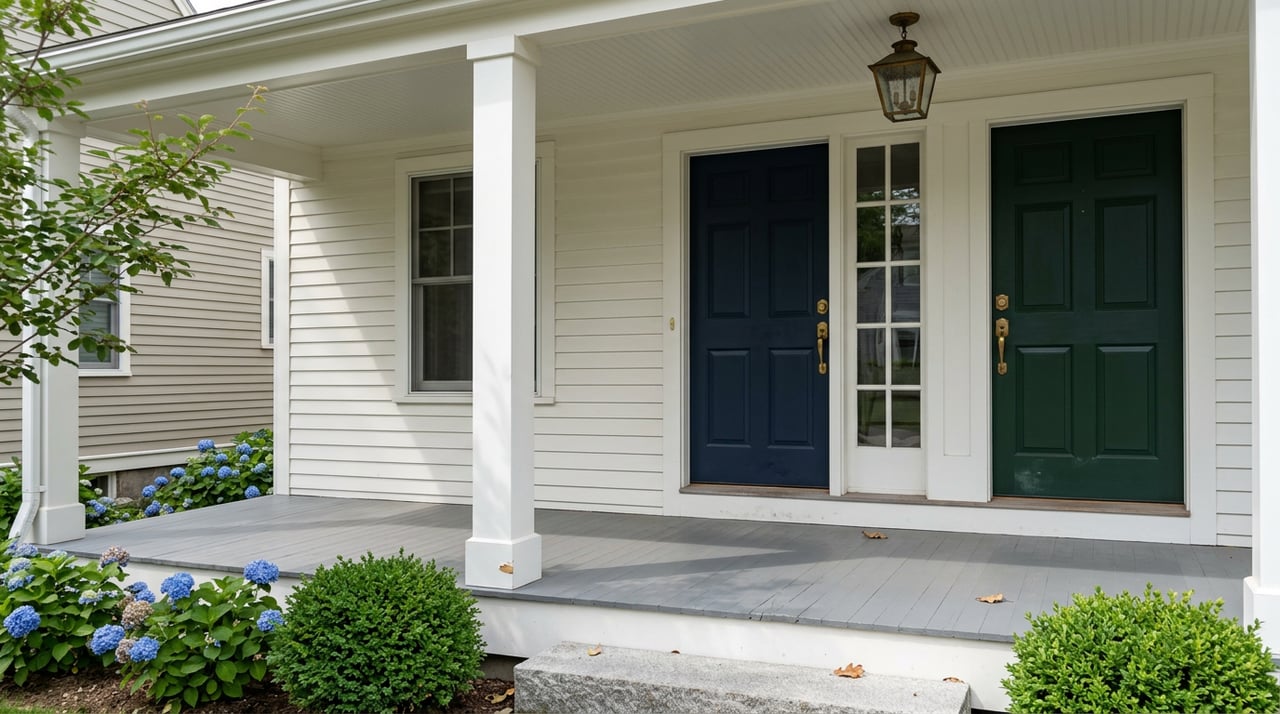
If you have shopped for a two-family in Leominster expecting a meaningful discount against a comparable single-family, you are working from an assumption the market is quietly retiring. Leominster's own Assessor's Office publishes an explanation on its city website that most real estate content never touches: for years, single-family homes sold for more than similarly sized two-family properties in the same neighborhoods, because most local buyers did not want to be landlords. That gap has closed significantly over the last five years, and it closed because two-family prices rose faster than single-family prices, not because two-families got nicer or single-families got worse.
That is the mechanism worth understanding before you write an offer. The discount you are budgeting for a two-family against a comparable single-family is smaller than it used to be, and the reason is a shift in who is bidding, not a shift in the housing stock itself.
What the city is actually telling you
The assessor's page exists to answer questions about tax assessments, not to sell real estate, which is part of why the observation carries weight. Buried in the city's real estate tax FAQ is a plain statement: two-family properties have become more popular with new homebuyers because a tenant can contribute to the owner's mortgage obligation. In a market where a single-family in Leominster sold for a median $453,000 in July 2026 on 30 days average time on market, a monthly rent check covering a third bedroom's worth of mortgage is not a marginal consideration. It is the difference between qualifying and not qualifying for some buyers, and that has changed who shows up to bid on a two- or three-family listing.
The city's framing matters because it reverses the usual story. Most buyers assume a multi-family costs less per comparable square foot because it comes with landlord headaches: tenant turnover, maintenance coordination, and Massachusetts' lead paint compliance obligations for anything built before 1978. Those headaches are real. But the assessor is describing a market where enough buyers have decided the tenant income is worth the headache that the price gap tied to those headaches is shrinking anyway.
What that looks like in current listings
Leominster currently has 9 multi-family properties on the market at a median listing price of $585,000 citywide. That figure is not uniform across the city. In the West Side sub-market, five multi-family listings carry a median asking price of $648,000, a meaningfully higher band than the citywide figure. Downtown Leominster, North Leominster, and West Leominster round out the areas where most current multi-family inventory sits, and asking prices inside that inventory this August range from roughly $540,000 for a modest two-unit to $799,995 for an eleven-bedroom three-family.
One five-unit listing on the market this month illustrates the income side of that math directly: it advertises rental income of $7,656 a month, or roughly $92,000 a year, against a purchase price in that same general band. Whether that pencils depends on your financing terms and what the building needs, but it is a real number attached to a real listing, not a market-wide average that smooths over the specific building you are actually considering.
| Market slice | Listings | Median asking price |
|---|---|---|
| Leominster, citywide | 9 multi-family | ~$585,000 |
| West Side sub-market | 5 multi-family | $648,000 |
The spread between those two numbers is a reminder that "Leominster multi-family" is not one price point. A buyer comparing a two-family in West Side against one in a lower-priced pocket of the city is not comparing apples to apples on rent potential, building age, or lot size, and the assessor's closing-gap observation describes an average trend across a market that still has real internal variation.
The tax quirk that changes your cash flow math
Separate from the price question, Leominster made a decision that directly affects an investor's carrying costs: for fiscal 2026, the city set its tax rate at $13.66 per $1,000 of assessed value, applied equally to residential and commercial property. Many Massachusetts cities split their rate, shifting a higher burden onto commercial and industrial classifications and leaving small multi-family owners caught in between depending on how the property is classified. Leominster's Assessors' Office has not made that shift. A $600,000 two- or three-family assessed near its purchase price would carry an annual tax bill close to $8,200 at that unified rate, a number you can build directly into a proforma without guessing whether the city will reclassify the property against you later.
That stability is worth more to a small investor than it sounds. A split rate is a structural cost that shows up every single year regardless of how well the building performs. Leominster choosing not to impose one is a quiet advantage relative to municipalities where the same purchase carries a heavier annual tax load purely because of how the parcel is classified.
The age of the building is still doing work in the background
None of this erases the due diligence the assessor's framing might tempt a buyer to skip. A large share of Leominster's rental housing predates 1940, and anything built before 1978 falls under the Massachusetts Lead Law, which requires an owner to remove or control lead paint hazards in any unit where a child under six will live. This is a real cost and timeline consideration on the older end of Leominster's multi-family stock, and it belongs in your inspection period regardless of how favorable the price convergence looks on paper.
The Massachusetts Lead Law page lays out the notification and compliance requirements in full, and it is worth reading before you go under agreement on anything built in the era that makes up so much of Leominster's two- and three-family inventory.
Reading a listing differently now
Given all of this, a buyer comparing single-family and multi-family options in Leominster this year should treat a few things as standard practice rather than optional extras:
- Ask for the actual rent roll, not an estimated market rent, and confirm it against lease terms rather than a listing agent's projection.
- Confirm the property's construction year before assuming a lead compliance timeline, since the obligation only attaches to pre-1978 construction.
- Compare asking price against the specific sub-market, since West Side's median running $63,000 above the citywide multi-family figure means a "good deal" in one pocket of the city may be an ordinary price in another.
- Model your tax carrying cost using the current unified $13.66 rate rather than assuming a split-rate penalty that Leominster has not applied.
Frequently Asked Questions
Does the closing price gap mean two-families now cost the same as single-families in Leominster? No. Single-family homes still generally command a higher price than comparable two-families in the same neighborhood. The assessor's point is that the size of that premium has shrunk over the last five years, not that it has disappeared.
Does Leominster charge multi-family owners a higher tax rate than single-family owners? No. The city applies its $13.66 per $1,000 rate uniformly across residential and commercial classifications for fiscal 2026, rather than adopting a split rate that would shift more burden onto income property.
How old is most of Leominster's multi-family housing stock? A large portion of the city's rental units predate 1940, which means Massachusetts' pre-1978 lead paint compliance rules apply to a meaningful share of the multi-family inventory a buyer will be shopping.
If you are weighing a single-family against a two- or three-family purchase in Leominster and want the actual rent rolls, tax history, and lead compliance status on specific properties rather than citywide averages, Doug Tammelin can pull the comparables that matter for your decision. Get your instant home valuation to see where your target property sits against what the market is actually paying right now.
This article is general information, not legal, tax or financial advice. Consult a qualified professional about your situation.