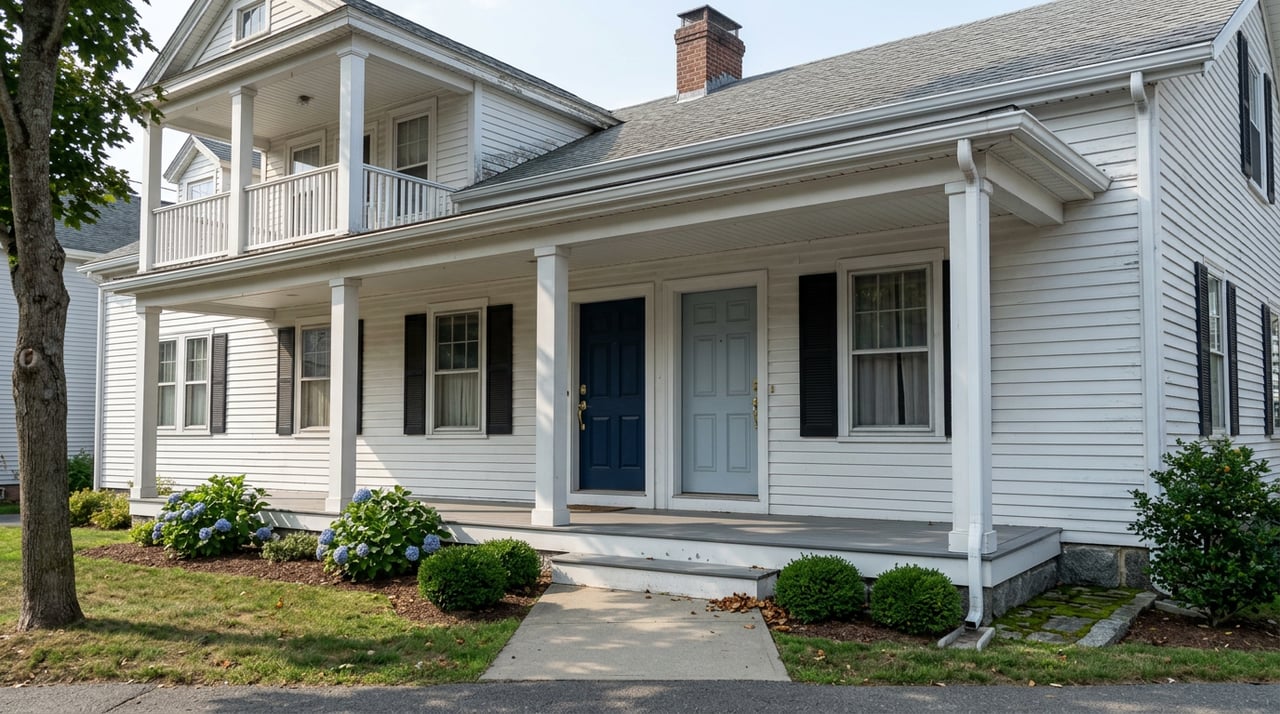
Thinking about buying a 2–6 unit property in Fitchburg but unsure where to start? You are not alone. Many small investors look here for steady demand, lower entry prices than Boston, and practical house-hack potential. In this guide, you will learn what kinds of buildings to target, what current rents look like, how to run the numbers, financing options to consider, and a clear due-diligence checklist to help you move with confidence. Let’s dive in.
Why Fitchburg attracts small investors
Fitchburg is a north-central Worcester County city of about 41–42 thousand residents with MBTA commuter rail access to Boston. Its older industrial core, steady redevelopment efforts, and proximity to regional employers support consistent rental demand. Compared with Boston or inner suburbs, prices are typically more accessible, which is why many buyers pursue 2–4 unit house-hacks or classic triple-deckers.
For quick local context, review population and tenure data on Census QuickFacts for Fitchburg. This gives you a baseline for renter share and long-run rent trends.
Property types and zoning basics
- Common buildings: 2–4 unit wood-frame homes, including classic New England three-families, plus some small 5–6 unit walkups.
- Target profiles: Properties marketed to both investors and owner-occupants are common, which can expand your financing choices.
- Zoning checks: Fitchburg uses Smart Growth and MBTA-related overlays in certain areas. Always verify by-right uses, unit counts, and potential conversion rules before you write an offer. A quick zoning confirmation early in due diligence can save weeks later.
Current rents and vacancy signals
On-market rent indices show a clear picture right now:
- RentCafe reported an average Fitchburg apartment rent around $1,822 in February 2026, with typical 1-bed near $1,582 and 2-bed near $1,837.
- Another on-market index shows a similar average in the low $1,800s.
- For voucher comparisons, FY2026 HUD Fair Market Rent for a 2-bed is about $1,749 in the Fitchburg–Leominster area. You can review the framework on the HUD Fair Market Rents page.
Vacancy appears tight across Central Massachusetts. Recent local reporting points to multifamily vacancy near about 3 percent. For underwriting, a 4–6 percent vacancy allowance is a practical default unless you have hyper-local evidence to adjust lower or higher.
Prices and cap rate context
Small multifamily cap rates in Worcester County often trade in the 6–8 percent range depending on location, condition, and building size. Neighborhood sale medians within Fitchburg can vary, and overall city medians have hovered around the low $400Ks in recent snapshots, with some neighborhoods higher and some lower. Those are all-home medians, not small-multifamily only, but they are helpful reference points when you set expectations.
The bottom line: if your calculated cap rate using current income and realistic expenses is far from the asking price, that is a strong signal to negotiate or walk away.
Underwriting made simple
Get comfortable with a few core metrics. They will help you compare deals quickly and keep emotions out of your decision.
Key formulas to know
- Gross Scheduled Rent (GSR) = sum of market rents for all units, annual
- Effective Gross Income (EGI) = GSR minus vacancy and collection loss, plus other income
- Operating Expenses = taxes, insurance, owner-paid utilities, repairs/maintenance, management, reserves
- Net Operating Income (NOI) = EGI − Operating Expenses
- Cap Rate = NOI ÷ Purchase Price
- Cash-on-Cash = (NOI − Annual Debt Service) ÷ Cash Invested
A quick 2-unit example
Use current on-market rent data to set assumptions, then apply a conservative vacancy and expense ratio.
- Rents: Two 2-bed units at about $1,837 each per month. GSR = 2 × $1,837 × 12 = $44,088.
- Vacancy: Budget 5 percent. EGI ≈ $44,088 × 0.95 = $41,883.
- Expenses: Many small buildings run 35–45 percent of EGI. Use 40 percent here. Operating expenses ≈ $41,883 × 0.40 = $16,753.
- NOI: $41,883 − $16,753 = $25,130.
- Cap rate test: If the price is $375,000, cap rate ≈ $25,130 ÷ $375,000 = 6.7 percent.
How to read this: A 6.7 percent cap rate sits within the local small-multifamily range. Your cash-on-cash return will then depend on down payment, interest rate, and closing costs. Always plug in the property’s actual rent roll, real tax bill, and current insurance quote before you firm up an offer.
Sensitivity checks to run
- Vacancy: test 4 percent and 8 percent to see how EGI moves.
- Expenses: test 35 percent and 45 percent of EGI to see if your cushion is adequate.
- Debt terms: model at least two rate scenarios and both 20 percent and 25 percent down payments for investor loans.
Financing options to explore
- Owner-occupant conventional: Many buyers use Fannie Mae conventional programs for 2–4 unit owner-occupied homes. Lenders may count documented rental income from the subject property. Confirm the latest eligibility, LTV, and any lender overlays.
- Investor financing: Conventional investor loans and DSCR loans are common. DSCR products qualify primarily on the property’s cash flow, often requiring larger down payments.
- FHA for 1–4 unit owner-occupants: Check current guidance and lender policy if you plan to live in one unit.
Tip: Get a conditional pre-approval with a lender who regularly finances 2–4 unit properties. Ask about rental income treatment, reserves, and appraisal requirements for small multifamily.
Due diligence checklist
- Market rents and comps: Confirm current market rents using on-market indices and recent leased comparables. Adjust for condition, utilities, parking, and amenities.
- Parcel and taxes: Pull the exact property tax bill from the Fitchburg Assessor and review any exemptions or changes that could reset the bill.
- Building and code: Request permit history and code enforcement records. Look for open violations or unpermitted work.
- Utilities and expenses: Collect 2–3 years of owner-paid utilities, insurance invoices, water and sewer, and maintenance logs.
- Rent roll and leases: Get every lease, addenda, and security deposit accounting. Match deposits to bank records.
- Physical inspection: Hire a licensed home inspector and a contractor familiar with older MA multifamily. Pay close attention to roof, heating systems, electrical, foundation, and potential environmental items. For pre-1978 structures, follow lead paint rules.
- Title and survey: Order title, check for liens, and get a plot plan if you are considering expansion or conversion.
- Zoning and overlays: Verify the current zoning use, unit count, parking requirements, and whether a Smart Growth or MBTA overlay applies to your parcel.
Risks to price in upfront
- Deferred maintenance: Many small multifamily buildings here are older. Budget for near-term capital items like boilers, roofs, and wiring.
- Tenant stability and affordability pressure: Income levels vary across the region, and voucher households are part of the local mix. Know your screening criteria and stay current on any policy changes affecting notices or timelines.
- Rate sensitivity: Small changes in interest rates can flip cash flow. Model multiple scenarios and consider fixed-rate options to manage risk.
Action plan to move forward
- Clarify your strategy: house-hack, hold, or add value. Set a target cap rate and a minimum cash-on-cash return.
- Build your numbers: Use current asking rents near the low $1,800s on average, budget 4–6 percent vacancy, and 35–45 percent operating expenses to get an initial NOI.
- Validate with documents: Verify taxes from the Assessor, confirm utility responsibility by unit, and reconcile the rent roll to actual deposits.
- Line up financing: Secure a pre-approval that fits your plan, whether owner-occupant conventional, FHA, or DSCR.
- Walk the building: Inspect all units, common areas, systems, and exterior. Adjust your offer if you uncover material issues.
If you want a clear path from first showing to closing and beyond, including leasing and property management support, connect with Doug Tammelin. You will get data-driven guidance, disciplined underwriting, and local operations experience that protect your time and returns.
FAQs
What are typical Fitchburg rents for small multifamily today?
- On-market indices show an average near the low $1,800s per month citywide, with recent examples around $1,822 overall and about $1,837 for a typical 2-bedroom.
How tight is rental vacancy in Central Massachusetts right now?
- Recent local reporting points to multifamily vacancy near about 3 percent, so underwriting a 4–6 percent vacancy allowance is a practical baseline.
How should I underwrite a 2–4 unit deal in Fitchburg?
- Start with market rents, subtract a 4–6 percent vacancy, apply a 35–45 percent expense ratio, compute NOI, then test cap rate and cash-on-cash under multiple financing scenarios.
What cap rate should I target for a small Fitchburg property?
- Many stabilized 2–6 unit properties in the region trade around 6–8 percent cap rates, with condition and location pushing the number up or down.
How does HUD Fair Market Rent affect my rent assumptions?
- FMR is a useful benchmark for voucher programs and reflects about the 40th percentile of rents, so compare your unit mix to FY2026 FMRs when evaluating voucher-friendly income.
Which financing options work for 2–4 unit buyers?
- Owner-occupants often use conventional or FHA programs that allow 2–4 units, while investors commonly use conventional investor loans or DSCR products that underwrite to property cash flow.
What are the biggest risks with older triple-deckers?
- Budget for capital items like roofs, heating systems, and electrical updates, and ensure a thorough inspection that addresses lead paint rules for pre-1978 buildings.