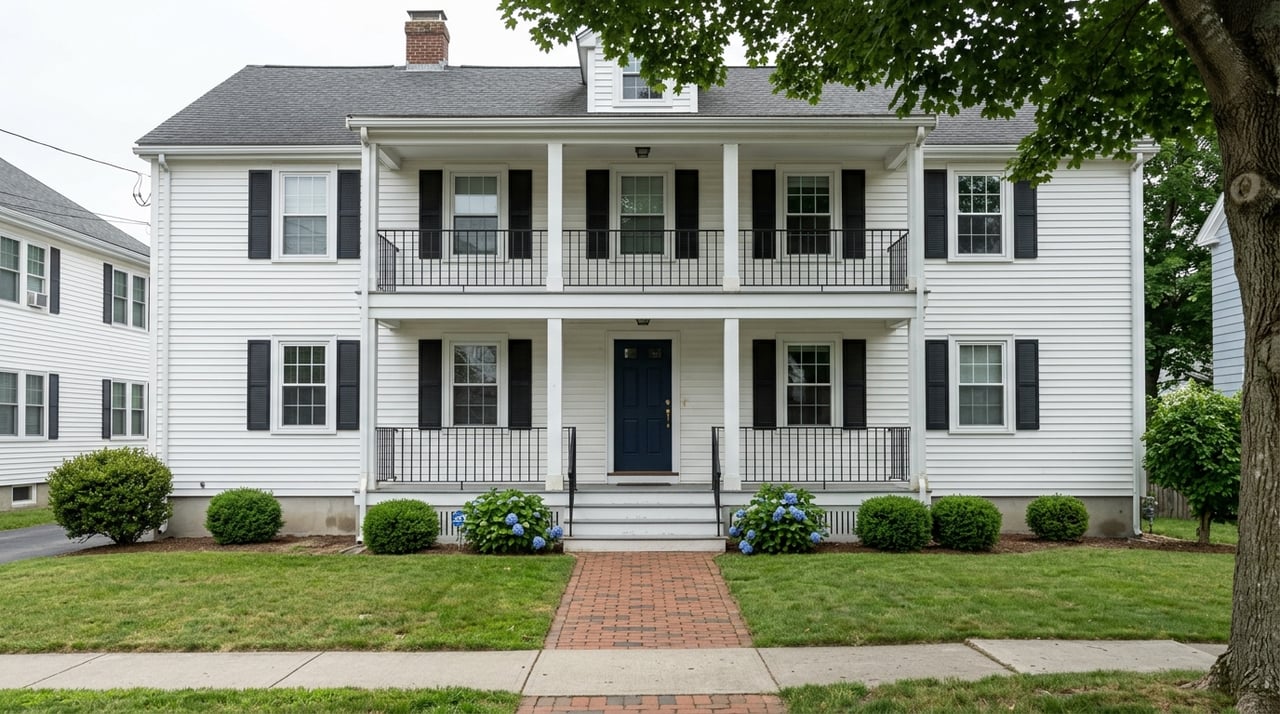
If you want to live in one unit and let rent help cover your mortgage, Fitchburg deserves a serious look. For many buyers, house hacking sounds simple on paper but gets more complicated once you factor in prices, rents, taxes, financing rules, and landlord responsibilities. In this guide, you’ll see why Fitchburg can work for this strategy, which property types fit best, and what numbers you need to watch before you buy. Let’s dive in.
Why Fitchburg fits house hacking
Fitchburg has a housing mix that makes house hacking more realistic than in many Massachusetts markets. About 32.46% of homes in the city are in 2 to 4 unit buildings, compared with 12% statewide. That matters because small multifamily properties are the most direct path to living in one unit while collecting rent from the others.
The city is not purely renter-dominated either. Fitchburg’s owner-occupied housing rate is 54.1%, which points to a mixed market where owner-occupants and renters both play a meaningful role. For a buyer, that can create more options than a market made up mostly of single-family homes or mostly large rental buildings.
Current pricing also helps explain why buyers are looking closely at the area. In May 2026, Realtor.com reported a median listing price of $394,000, a median sold price of $420,000, 27 days on market, and a 100% sale-to-list ratio. That suggests a market that is active and competitive, but not impossible to navigate with a clear plan.
Fitchburg numbers to know
House hacking only works if the monthly math works. In Fitchburg, a few local numbers can help you build a more realistic starting point.
- Median listing price: $394,000
- Median sold price: $420,000
- Median days on market: 27
- Sale-to-list ratio: 100%
- Median rent: $1,850 per month
- FY2026 tax rate: $13.29 per $1,000 of assessed value
Property taxes deserve extra attention in Central Massachusetts. Even when a purchase price looks manageable, the tax bill can materially change your monthly payment and your long-term cash flow.
Best property types in Fitchburg
2 to 4 unit homes
For most buyers, a 2 to 4 unit property is the cleanest house-hack option in Fitchburg. The rental income is built into the property type, and the city already has a strong supply of this kind of housing. If you plan to occupy one unit as your primary residence, the other units can help offset your total monthly ownership cost.
This setup also gives you a clearer path when you sit down with a lender. Appraisers and underwriters are used to evaluating small multifamily properties with rental income, which can make the numbers easier to support than a less typical setup.
Single-family with an accessory apartment
A second path is a single-family home with an accessory apartment, sometimes called an ADU. In Fitchburg, the city’s posted accessory dwelling unit amendment allows accessory apartments by right in the RR and RA districts and by special permit in the RB district. The rule also requires one of the two dwelling units to be owner-occupied.
There are limits to know before you get too far into this strategy. The accessory apartment is capped at 800 square feet, and the lot can have only one accessory apartment. This route can be attractive, but it is more zoning-sensitive than buying a standard duplex, triplex, or four-family.
Financing options for house hackers
A lot of buyers first hear about house hacking because of lower down payment options. That can help, but the stronger way to think about financing is as a combination of qualification and cash flow.
HUD says FHA loans can be available on 1 to 4 unit properties with as little as 3.5% down. For 3 to 4 unit FHA properties, HUD also requires a self-sufficiency test that compares the property’s rental income to the monthly housing payment. In other words, low down payment alone does not guarantee the deal works.
Freddie Mac also offers owner-occupied financing for 2 to 4 unit primary residences. Its program allows rental income from the other units to be added to borrower income, and the guide shows up to 95% maximum loan-to-value for eligible 2 to 4 unit primary residences under the standard Accept path. For some buyers, that means as little as 5% down.
Fannie Mae also supports the use of rental income on owner-occupied 2 to 4 unit properties. In practice, your lender will still want documentation showing that the rent is supportable. That is why local rent evidence matters so much before you write an offer.
How to underwrite rent conservatively
If you are buying in Fitchburg, it is smart to underwrite using the lower of market rent and lender-supported rent evidence. That helps you avoid building your budget around a best-case number that may not hold up during appraisal or underwriting.
Realtor.com shows a median rent of about $1,850 per month in Fitchburg. MassHousing’s FY2026 fair market rent schedule for the Fitchburg-Leominster HUD Metro area shows:
- 1 bedroom: $1,410
- 2 bedroom: $1,749
- 3 bedroom: $2,247
- 4 bedroom: $2,637
These figures are useful as conservative anchors, especially for buyers who want a more disciplined estimate. A 2 bedroom unit in the high $1,700s may be a reasonable starting point for underwriting, while larger units may support higher figures depending on condition, utilities, parking, and layout.
Compare rent offset, not just price
Many first-time buyers focus too much on the purchase price and not enough on the full monthly picture. A better approach is to compare expected rent offset against your total monthly ownership cost.
That total cost often includes:
- Principal and interest
- Property taxes
- Homeowners insurance
- Mortgage insurance if applicable
- Utilities you may need to cover
- Repairs and maintenance
- Closing costs and reserves
If you buy a multifamily home with thin margins, one surprise repair or one vacant unit can change the picture quickly. A property that looks affordable on the listing page can feel very different once you account for taxes, heating responsibility, and reserves.
Landlord rules start on day one
If you house hack in Fitchburg, you are not just buying a home. You are also taking on landlord responsibilities right away, and Massachusetts has strict rules in several areas.
Fitchburg’s Health Department says it enforces the Massachusetts State Sanitary Code and local housing regulations. The city’s housing page also says rental-permit inspections are required when a third party is involved with rental payments, and the city’s rental-permit page lists a $25 permit fee. Because the public wording is narrow, it is smart to confirm permit applicability directly with the Health Department before closing.
Heat and habitability
Massachusetts habitability rules are not optional. The state sanitary code says owners must provide, install, and maintain smoke detectors and carbon monoxide alarms in operable condition. Mass.gov also states that landlords must install and maintain carbon monoxide alarms in dwelling units that have a source of carbon monoxide.
Heating standards are especially important in older multifamily housing. Massachusetts guidance says residential units must be kept at 68°F during the day and 64°F at night during the heating season. If you are looking at a property with shared systems or older boilers, you need to understand who controls the heat and who pays for it.
Utility billing issues
Electricity can create major problems if you assume you can bill tenants informally. Massachusetts says residential property owners are generally required to pay electricity for each unit unless the unit has a separate utility-company meter and the lease clearly assigns payment to the tenant.
That means older homes with mixed or unclear utility setups deserve careful review. A property with separate-looking panels is not the same as a property with utility billing arranged correctly under state rules.
Lead paint compliance
Lead is another major issue in older housing stock. Massachusetts law requires removal or covering of lead paint hazards in homes built before 1978 where children under 6 live. The Attorney General’s guide also says owners must sign and retain tenant lead-law notifications and disclosure forms for pre-1978 rentals.
If a child under 6 will live in the unit, the landlord must delead or bring the unit under interim control. It is also illegal to refuse to rent because of lead compliance concerns. For many house hackers, this is one of the biggest operational items to investigate before purchase.
Security deposit rules
Massachusetts also has strict rules on security deposits. A landlord must keep a security deposit in a separate, interest-bearing account and provide written notice of the bank and account information within 30 days.
That may sound like a small detail, but compliance matters. If you plan to manage the property yourself, you need systems for tenant funds, paperwork, and deadlines from the start.
A practical Fitchburg house-hack plan
If you are serious about house hacking in Fitchburg, keep your process simple and disciplined. The goal is not just to buy with a low down payment. The goal is to buy a property that works both as your home and as a sustainable rental setup.
A smart first pass usually looks like this:
- Target 2 to 4 unit properties first because they are the most straightforward fit.
- Compare expected unit rent using conservative local assumptions.
- Calculate total monthly carrying cost, including taxes and insurance.
- Review heating, metering, and utility responsibility before making an offer.
- Investigate lead exposure, permit questions, and required safety systems.
- Confirm with your lender how much rental income can count toward qualification.
This kind of disciplined review is where buyers avoid expensive surprises. In a market like Fitchburg, the opportunity is real, but so is the need for careful underwriting and operational planning.
House hacking in Fitchburg can make sense because the city has a meaningful supply of small multifamily homes, current rents that can offset costs, and a local path for owner-occupied accessory apartments. The best outcomes usually come from buyers who treat the purchase like both a home decision and a numbers decision. If you want help evaluating multifamily options, rent assumptions, or the day-to-day realities of owning in Central Massachusetts, Doug Tammelin can help you build a smarter plan.
FAQs
What makes Fitchburg a good market for house hacking?
- Fitchburg has an unusually high share of 2 to 4 unit housing at 32.46%, plus rents and home prices that can make rent offset a realistic strategy for owner-occupants.
What property type works best for house hacking in Fitchburg?
- For most buyers, a 2 to 4 unit property is the most straightforward option because rental income is built into the property type and is easier to support with lender documentation.
Can you use FHA financing for a Fitchburg house hack?
- Yes, FHA can be used on 1 to 4 unit properties, and HUD says eligible buyers may qualify with as little as 3.5% down, though 3 to 4 unit properties must also meet a self-sufficiency test.
Are accessory apartments allowed for house hacking in Fitchburg?
- Fitchburg allows accessory apartments by right in the RR and RA districts and by special permit in the RB district, with owner-occupancy required and the accessory apartment limited to 800 square feet.
What rent should you use when analyzing a Fitchburg house hack?
- A conservative approach is to use the lower of market rent and lender-supported rent evidence, with local benchmarks including a median rent of $1,850 and FY2026 fair market rents ranging from $1,410 to $2,637 depending on bedroom count.
What landlord rules matter most for Fitchburg house hackers?
- Key issues include rental-permit questions, smoke and carbon monoxide alarm requirements, heating standards, utility billing rules, lead paint compliance, and strict Massachusetts security deposit handling requirements.